
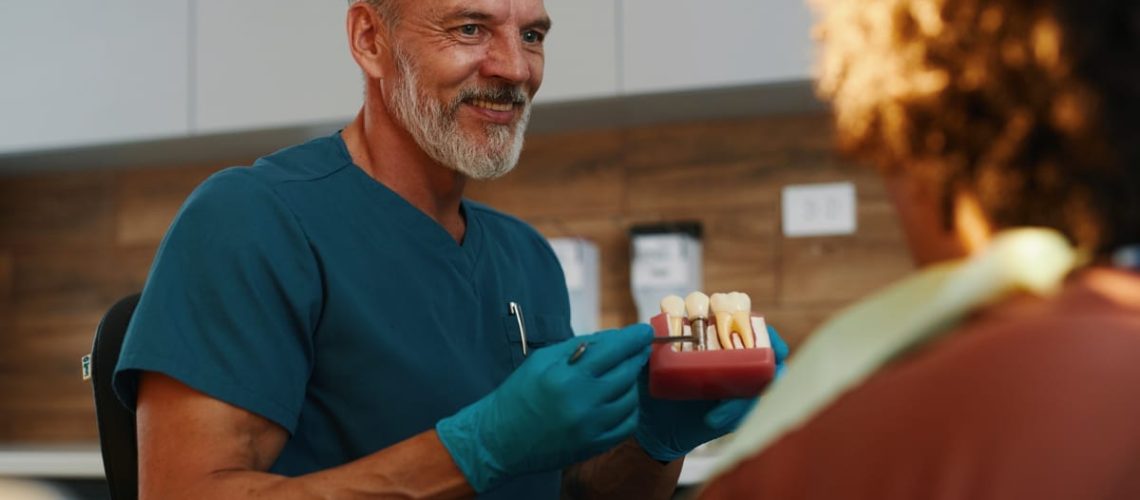
Losing a tooth — or several — changes more than just your smile. It affects how you eat, speak, and feel about yourself every day. If you are weighing dental implants vs. dentures vs. bridges and wondering which is right for you in Colleyville, you are not alone. At Serene Dental of Colleyville, Dr. Shilpa Karri helps patients understand all three options so they can make confident, informed decisions. This guide breaks down each choice clearly.
Understanding Your Three Main Tooth Replacement Options
Before comparing, it helps to understand what each option actually is. A dental implant is a titanium post surgically placed into your jawbone. It acts as an artificial tooth root and supports a crown on top. It looks and feels like a natural tooth.
A dental bridge spans the gap left by one or more missing teeth. It anchors to neighboring teeth using dental crowns on either side. Dental Bridges are a reliable, non-surgical solution that many patients choose. They restore both function and appearance without the recovery time of surgery.
Dentures are removable appliances that replace multiple — or all — missing teeth. They rest on the gums and can cover an entire arch. Modern dentures fit better and look more natural than older versions. They remain the most affordable upfront option for patients missing many teeth.
Dental Implants vs. Dentures vs. Bridges: How They Compare in Colleyville
When comparing these options side by side, several factors matter most. These include durability, bone health, comfort, and daily maintenance. Understanding these differences helps you ask better questions at your consultation.
- Longevity: Implants can last a lifetime with proper care. Bridges typically last 10–15 years. Dentures usually need replacement or adjustment every 5–10 years.
- Bone preservation: Implants stimulate the jawbone, preventing bone loss. Bridges and dentures do not provide this benefit.
- Comfort: Implants feel like natural teeth. Bridges feel stable and fixed. Dentures can slip or cause soreness over time.
- Maintenance: Implants are cared for just like natural teeth. Bridges require special flossing tools. Dentures must be removed and cleaned daily.
- Candidacy: Implants require sufficient jawbone and good overall health. Bridges need healthy adjacent teeth. Dentures work for almost any patient.
No single option is universally best. The right choice depends on your specific oral health, lifestyle, and goals.
Who Makes a Good Candidate for Each Option?
Dental implants work best for patients who are in good overall health. You need adequate jawbone density to support the titanium post. Non-smokers and patients without uncontrolled diabetes tend to have better outcomes. If you want a permanent, low-maintenance solution, implants are worth serious consideration.
Dental Bridges are a strong choice when you are missing one to three consecutive teeth. Your neighboring teeth must be healthy enough to support the crowns. Bridges are a great middle ground — more stable than dentures, less invasive than implants. They are also completed in fewer appointments.
Dentures are often recommended when multiple teeth are missing across an arch. They are also the go-to option when bone loss makes implants more complex. Patients who want to restore full function quickly often start with dentures. Some patients later upgrade to implant-supported dentures for better stability.
What to Expect During the Decision-Making Process
Choosing between these options is not something you have to do alone. Dr. Karri begins with a thorough exam and digital X-rays. This helps evaluate your bone density, gum health, and overall oral condition. From there, she walks you through which options are realistic for your situation.
The process typically includes these steps:
- Initial consultation and full oral health evaluation
- Review of your medical and dental history
- Discussion of your aesthetic goals and lifestyle needs
- A personalized treatment recommendation from Dr. Karri
- Review of timeline, procedures, and what recovery looks like
There is no pressure to decide on the spot. Education is a priority at Serene Dental of Colleyville. Dr. Karri wants every patient to feel informed and confident before moving forward.
Key Benefits of Each Option at a Glance
Each replacement option offers real advantages depending on your needs. Here is a quick summary to help guide your thinking.
- Dental Implants: Permanent solution, preserves jawbone, looks and feels natural, easy to clean
- Dental Bridges: No surgery required, faster completion, stable and fixed in place, effective for single-gap restoration
- Dentures: Most affordable upfront, suitable for extensive tooth loss, removable for cleaning, can be made quickly
These benefits do not exist in a vacuum. Your age, health history, and budget all play a role in the decision. That is why a one-on-one consultation with Dr. Karri is so valuable.
Making the Right Choice for Your Smile in Colleyville
There is no wrong question when it comes to tooth replacement. Patients in Colleyville come to Serene Dental of Colleyville with all kinds of concerns — and Dr. Karri takes time to address every one. Whether you lean toward implants, bridges, or dentures, the goal is the same: restoring your confidence and quality of life.
Missing teeth affect more than appearance. They can change how you chew, speak, and even how your face looks over time. Acting sooner rather than later protects your remaining teeth and your jawbone. The right treatment makes a lasting difference.
If you are ready to explore your options, the team at Serene Dental of Colleyville is here to help. Dr. Karri brings both expertise and genuine care to every patient visit. Book Now to schedule your appointment with our team.
Frequently Asked Questions
How long do dental implants last compared to bridges and dentures?
Dental implants can last a lifetime with proper oral care. Bridges typically last 10 to 15 years before needing replacement. Dentures usually require adjustment or replacement every 5 to 10 years as your jaw changes shape over time.
Are dental implants painful to get?
Most patients report less discomfort than expected during the implant procedure. Local anesthesia is used to keep you comfortable throughout the process. Mild soreness during healing is common and manageable with over-the-counter pain relief.
Can I get a dental bridge if my neighboring teeth are healthy?
Yes. Healthy adjacent teeth are actually a requirement for a traditional dental bridge. The neighboring teeth are prepared and fitted with crowns to anchor the bridge in place. Dr. Karri will evaluate your specific situation to confirm you are a good candidate.
What happens to my jawbone if I choose dentures instead of implants?
When teeth are missing, the jawbone in that area gradually shrinks over time. Dentures rest on the gums and do not stimulate the bone the way implant roots do. This bone loss can change your facial structure and affect how dentures fit as years pass. Implant-supported dentures can help reduce this effect.
How do I know which tooth replacement option is right for me?
The best way to know is through a professional evaluation with Dr. Shilpa Karri at Serene Dental of Colleyville. She will review your bone density, gum health, and overall goals before making a personalized recommendation. Every patient’s situation is unique, and there is no one-size-fits-all answer.